
Tuesday, November 8, 2011


Wednesday, September 28, 2011
CREEKKEEPER launches new patrol boat
Some of you remember the tornado of Apr. 27, 2011 when our lives changed forever.
Among the damage was the destruction of my CREEKKEEPER patrol boat. a tree went through one side poking a large hole in the side. Then a bass boat sitting nearby came down on it crushing the hull making a crack about 6 feet long down the side. Needless to say It was irreparable.


Word went out to my fellow WATERKEEPER family and low and behold donations were sent to replace my boat.
Here, ladies and gents is the new and improved patrol boat for Your Hurricane CREEKKEEPER.
Lettering courtesy of Tuscaloosa Sign Co. in the Hurricane Creek Watershed.

It is a 16 foot Wenonah Prospector I found at Terrapin Creek Canoe Rentals. It had a small blemish on the hull where a kayak fell on it. Wait a year and no one will ever see it again, I promise to put more dings in it working for you.

It is lighter than the old boat and a little shorter. The rocker (upward curve in the hull) is almost as extreme as my old Blue Hole making it turn on a dime in rough water.


I can't wait to launch this baby as soon as I get the chance. Anyone up for a paddle trip?
Among the damage was the destruction of my CREEKKEEPER patrol boat. a tree went through one side poking a large hole in the side. Then a bass boat sitting nearby came down on it crushing the hull making a crack about 6 feet long down the side. Needless to say It was irreparable.


Word went out to my fellow WATERKEEPER family and low and behold donations were sent to replace my boat.
Here, ladies and gents is the new and improved patrol boat for Your Hurricane CREEKKEEPER.
Lettering courtesy of Tuscaloosa Sign Co. in the Hurricane Creek Watershed.

It is a 16 foot Wenonah Prospector I found at Terrapin Creek Canoe Rentals. It had a small blemish on the hull where a kayak fell on it. Wait a year and no one will ever see it again, I promise to put more dings in it working for you.

It is lighter than the old boat and a little shorter. The rocker (upward curve in the hull) is almost as extreme as my old Blue Hole making it turn on a dime in rough water.


I can't wait to launch this baby as soon as I get the chance. Anyone up for a paddle trip?
 |
| Letters by Tuscaloosa Sign Co. in the Hurricane Creek watershed |
Tuesday, August 2, 2011
Experts say saving your tornado-ravaged yard starts with protecting the soil and damaged trees
Experts say saving your tornado-ravaged yard starts with protecting the soil and damaged trees
Published: Sunday, June 19, 2011 at 12:37 p.m.
Last Modified: Sunday, June 19, 2011 at 12:37 p.m.
Rob Crawford is a man with a mission. A member of the International Society of Arborists and a certified consulting arborist specializing in evaluating and preserving large trees, Crawford is a veteran of urban reforestation in post-Katrina Mississippi. He visited Tuscaloosa in mid-May to consult on a restoration plan for the tornado-impacted areas of Hurricane Creek.
One of his goals is to share his experience with urban reforestation.
“As I was driving through town, I realized that this was like no tornado I had ever encountered. The devastation was more like what I had experienced in Mississippi after Katrina. New Orleans received most of its damage from flooding but Mississippi took a direct hit from the wind. I realized that I wanted to share what we learned — the things that went well and those that turned out to be mistakes,” Crawford said.
His advice for homeowners is centered first on protecting and building the soil. To protect the soil and the roots of any trees still remaining and to prepare the ground for future tree and shrub plantings, it is important to keep heavy machinery out of the area or at least off the roots. This will help to avoid compacting the soil and unintentionally removing topsoil while removing tree debris.
“When repairing the hardscape in your yard, avoid cutting into a tree’s roots with an irrigation system or sealing off the roots from water and air by placing a driveway or sidewalk over a portion of the root system,” he advised. “This only serves to weaken the tree.
“The ecosystem that our trees and plants live in begins with a healthy habitat for soil microbes. Mulching creates that habitat. The microbes digest particles of debris making nutrients available to the trees. The best way to ‘feed’ the microbes is with mulch.”
The roots of trees still standing after the storm have been suddenly exposed to the drying effects of direct sunlight. Crawford suggests a 4- to 6-inch layer of mulch to keep the newly exposed soil cool, to add organic matter to the soil and to give trees’ feeder roots a sponge-like, air-filled medium to grow into.
When asked what mulch would be the best for the trees, Crawford recommends “shredded leaves and small branches” but discourages using freshly chipped material.
“Fresh bark, chips and sawdust tie up nitrogen in the soil as they decay,” he said. “Allow chips to compost before using them. Adding a handful of nitrogen fertilizer to the compost will speed the process along.”
He noted that “most trees don’t have a tap root but a root plate. A tree’s root plate is an extensive web of small roots that extends to the drip line of the tree (the edge of its branches), which is often 10 feet or more beyond the trunk. To adequately feed the soil, and in turn the trees and shrubs, it is necessary to apply mulch that far out.”
He advises homeowners not to “get caught up in tree phobia and cut down trees near houses. Any trees still standing are probably strong and healthy. Give them a thick layer of mulch. It is the neglected trees that will become problems.”
He also counsels patience. “It’s human nature to want to make things right, right now. But planting trees and shrubs in the heat of summer is stressful to the plants and requires a great deal of water to get them through to cooler weather.”
Lastly, Crawford encourages people to manage their wood debris wisely. “Getting rid of small branches and limbs may seem like a good idea now, but in the fall you will need to mulch newly planted trees. One of the biggest mistakes we made after Katrina was hauling away all the wood. When fall planting time came, it cost the communities thousands of dollars to mulch the new trees.”
LETTER: Thank you ‘Creek Keeper'
LETTER: Thank you ‘Creek Keeper'
Published: Thursday, June 23, 2011 at 3:30 a.m.
Last Modified: Wednesday, June 22, 2011 at 7:08 p.m.
Dear Editor: I'd like to express my thanks and best wishes, albeit from afar, to John Watham and the "Friends of Hurricane Creek." Thank goodness for the leadership that John Watham has provided in the past, and is providing now with his thoughtful and caring plan to clean up Hurricane Creek in the aftermath of the April 27 disaster in Tuscaloosa.
His "old school," natural methods clean-up plan is the right thing to do. And it's not surprising he'd organize a plan like that in view of the history of Mr. Watham's "Creek Keeper" efforts and the overall efforts of the "Friends of Hurricane Creek", with their annual creek clean-up weekends.
I'm sending a little extra "Friends" membership donation this time that I know will be put to good use on old Hurricane Creek, the creek I grew up swimming and fishing in during my childhood and teenage days. Just wish I was closer so I could be there with my hip boots and gloves to give a hand.
John L. Wiley, Tuscaloosa native
Newport News, Va.
I'm sending a little extra "Friends" membership donation this time that I know will be put to good use on old Hurricane Creek, the creek I grew up swimming and fishing in during my childhood and teenage days. Just wish I was closer so I could be there with my hip boots and gloves to give a hand.
John L. Wiley, Tuscaloosa native
Newport News, Va.
Thursday, July 7, 2011
$650K targeted for creek cleanup
$650K targeted for creek cleanup
Published: Thursday, July 7, 2011 at 3:30 a.m.
Last Modified: Wednesday, July 6, 2011 at 11:50 p.m.
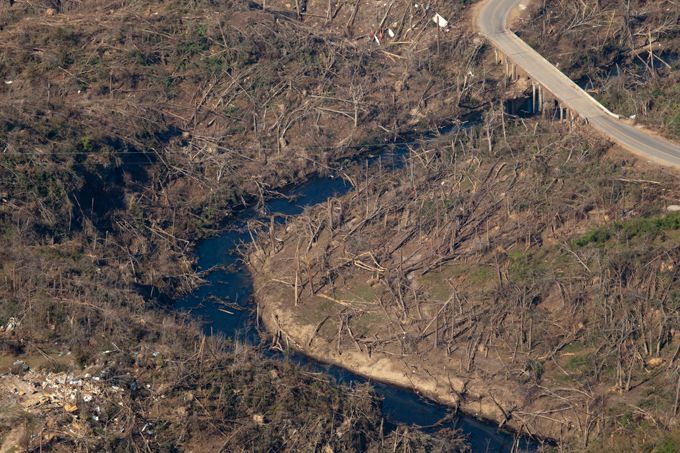
TUSCALOOSA | Tuscaloosa County will receive nearly $600,000 from the National Resources Conservation Service to clean up creeks clogged by downed trees and other debris from the April 27 tornadoes.
The grant will pay for cleanup in parts of eight creeks at an estimated cost of $648,515. The county will contribute 10 percent, which comes to $64,852, as required by the federal grant.
“This is money that we applied for from the NRCS’s Emergency Watershed Protection program and is specifically aimed at creeks and streams that have been impacted,” County Engineer Bobby Hagler told the Tuscaloosa County Commission, which formally accepted the money at its meeting Wednesday.
 |
| Photo copyright by JLW |
Hurricane Creekkeeper John Wathen said he was pleased that the county obtained the grant.
“This sounds like real good news, and it looks to me like this is a chance for organizations like ours, which are already working to clean our watershed as much as we can, to partner with the county,” Wathen said.
“I don’t know the details of the grant yet, but it sounds like a good start, especially for some of these creeks that do not have watchdog groups like ours.”
The targeted areas and the estimated costs are:
-- Hurricane Creek at Holt Peterson Road, $188,280;
-- Hanna Mill Creek at Hannah Creek Road, $39,429;
-- Duck Creek at Teal Circle, $48,050;
-- Boone Creek at Bill Lunceford Road, $28,122;
-- Cypress Creek at Martin Luther King Jr. Boulevard, $102,998;
-- Davis Creek at Hannah Creek Road, $128,327;
-- Hogstick Creek at Hannah Creek Road, $75,831.
County Commission Chairman Hardy McCollum said the county’s share of the cost will come out of its emergency fund and speculated that some of it could be deferred until the next fiscal year, which begins Oct 1.
“Like a lot of the damage to our city and county, this is a long-range project and can’t be accomplished overnight,” he said.
Reach Tommy Stevenson at tommy.stevenson@tuscaloosanews.com ore 205-722-0194.
Tuesday, June 14, 2011
Group wants to be careful clearing Hurricane Creek

Creekkeeper John Wathen, of the environmental organization Friends of Hurricane Creek, says he wants to clean up Hurricane Creek using “old school” techniques. The cleanup process using a natural method began Saturday and is expected to take at least a year.
Photo John L. Wathen
Photo John L. Wathen
Published: Tuesday, June 14, 2011 at 3:30 a.m.
Last Modified: Monday, June 13, 2011 at 11:25 p.m.
Hurricane Creek was a popular recreational area before the tornado. On April 27, it was the final resting place for three of the storm’s victims. Now it’s cluttered with a mangled mobile home, dead trees and piles of debris.
Although the storm swept over Hurricane Creek and stripped its ridges of anything green, new vegetation is growing.
“It’s bent but it’s not broken,” said Creekkeeper John Wathen, of the environmental organization Friends of Hurricane Creek.
He wants to assist the natural process of restoration, not replace it.
“We don’t want to clean it up fast,” Wathen said. “We don’t want the government and FEMA to get involved because if they do, they will bring in machines and destroy everything.”
Wathen plans to use what he calls “old school” techniques, which is why he brought in Russell Freeman, an arborist from Humboldt County, Calif.
Wathen and Freeman worked together on the cleanup of the Gulf Coast after Hurricane Katrina in 2005. Wathen said he knew Freeman was the man for the job because of his expertise in ropes and pulley systems.
“This whole area will look like a spider web,” Wathen said. “We plan to rig ropes in ways to lift the debris out and this way we do not have to use machines. It will be all natural.”
Wathen and Freeman agreed that the trees torn by 100 mph winds can be converted to mulch and lumber.
“Initially people just want to get the debris out, but if you take a step back and look, the trees can be used to restore the community,” Wathen said.
Wathen said 100 cubic yards of mulch purchased commercially typically runs about $1,800, so this process could save taxpayers a lot of money.
The process to clean up Hurricane Creek using a natural method is expected to take at least a year. The process began Saturday at 8 a.m. and will continue each weekend at the creek on Holt Peterson Road, Wathen said.
Volunteers are invited to participate in the clean-up effort. Those wanting to join in should wear closed-toed shoes that can get wet and bring long pants and long-sleeved shirts. Water and snacks will be provided.


Monday, June 13, 2011
No rules cover dealing with asbestos in damaged homes
Tuscaloosa News
No rules cover dealing with asbestos in damaged homes
State, EPA say that safety rules aren’t necessary

T.R. Pate, a contractor for Tree Farm in Fosters, sprays water on a house on 15th Street to keep asbestos down during demolition on Wednesday. Pate said it makes the process safer for workers and the environment.
Buy Photo Michelle Lepianka Carter | The Tuscaloosa News
Buy Photo Michelle Lepianka Carter | The Tuscaloosa News
Published: Monday, June 13, 2011 at 3:30 a.m.
TUSCALOOSA | The 20 or so damaged homes that Tree Farm contractors have already demolished were given a heavy dousing of water before, during and after demolition.
Facts
About asbestos:
Neither the U.S. Environmental Protection Agency nor the Alabama Department of Environmental Management requires contractors to ensure the safe and proper handling and disposal of asbestos from single-family homes.The EPA does offer some tips on how to reduce exposure to the known cancer-causing agent. Below is a few of the EPA’s suggestions. The full list can be found here: asbestos/pubs/ashome.html.
- Keep activities to a minimum in any areas with damaged material that may contain asbestos.
- Take precautions to avoid damaging asbestos material.
- Have removal and major repair done by people trained and qualified in handling asbestos. It is highly recommended sampling and minor repair also be done by professionals.
- Don’t dust, sweep or vacuum debris that may contain asbestos.
- Don’t saw, sand, scrape or drill holes in asbestos materials.
- Don’t use abrasive pads or brushes on power strippers to strip wax from asbestos flooring. Never use a power stripper on a dry floor.
- Don’t sand or try to level asbestos flooring or its backing. When asbestos flooring needs replacing, install new floor covering over it, if possible.
- Don’t track material that could contain asbestos through the house. If you cannot avoid walking through the area, have it cleaned with a wet mop. If the material is from a damaged area, or if a large area must be cleaned, call an asbestos professional.
— Source: Environmental Protection Agency
T.R. Pate, who works for the Fosters-based company, said there’s no federal, state or local requirement to spray water on the damaged homes, but he’s doing it for his safety, as well as those of his co-workers and the people still living nearby.
“It’s safe for us and safe for the environment,” Pate said. “It keeps the asbestos down, and there is asbestos everywhere.”
Asbestos, the known carcinogen used as a fire retardant in buildings for almost a decade after it was banned in 1978, is suspected to be present in most of the buildings damaged or destroyed in the April 27 tornado. Hosing down the damaged areas with water is one of the most reliable ways to keep asbestos particulates from circulating through the air.
About 7,000 buildings sustained damage when the EF-4 tornado ripped a 5.9-mile gash through the city. With the dry weather that’s followed, any disturbing of the wreckage can send fine particulates floating in the air for yards.
The danger posed by asbestos was a topic of discussion during last week’s City Council meetings, when Councilwoman Cynthia Almond pressed for answers on who exactly is responsible for ensuring the materials were disposed of properly.
In short, no one.
“It’s something this department has never done,” said John McConnell, director of the city’s Planning and Development Services, which oversees building inspections and construction.
No city department has ever been required to do so.
Federal regulations require asbestos disposal oversight only for commercial, governmental and multi-family buildings, like apartment complexes.
But when it comes to single-family homes, the only guidance offered by regulators are suggestions, said Dawn Harris-Young, spokeswoman for the U.S. Environmental Protection Agency’s Region 4, which oversees Tuscaloosa and the southeastern United States.
The EPA offers suggestions on how to control the airborne spread of the toxin and where it most likely is located inside a home.
Harris-Young said she doesn’t know why single-family homes are not monitored by the EPA for asbestos control and removal.
Locally, the Alabama Department of Environmental Management is responsible for ensuring asbestos is properly handled in commercial, government and multi-family structures
Similarly, ADEM’s rules are directly in line with federal regulations and go no further.
“Single-famly residences are not regulated as part of our asbestos program,” said ADEM spokesman Scott Hughes. “Although handling asbestos at those sites is not regulated, we do recommend that the residents wet the material and use caution when working in those areas.”
Hughes said ADEM paired with the Alabama Department of Public Health on an awareness program on proper ways to handle asbestos and lead in damaged homes.
A small team of ADEM officials was in Tuscaloosa last week checking on debris removal from buildings that fall under the guidelines. The team also offered suggestions on controlling asbestos to those working in single-family home neighborhoods, Hughes said.
“There’s no entity here to make sure we’re doing the right thing,” Richardson said.
City officials said inspectors could enforce rules on handling asbestos, but there would be a required amount of training before enforcement could begin.
Danny Hensley, the operations project manager for the U.S. Army Corps of Engineers, the federal agency overseeing storm debris removal, said the company contracted with the Corps to handle the work is following all safe handling guidelines for asbestos.
The company, Phillips & Jordan of Knoxville, Tenn., has at least one team of asbestos handlers digging through the rubble pushed to the curbside in search of materials that may contain asbestos.
The team is using water to keep the particulates out of the air, but how it is disposing of the materials isn’t clear. Officials at Phillips & Jordan’s temporary office in Tuscaloosa declined to answer questions about its asbestos handling procedures.
John Wathen, a Tuscaloosa-based environmental activist who heads the Friends of Hurricane Creek environmental group, said the lack of rainfall and excessive heat in the area in recent weeks has created dry and brittle construction materials that likely contain asbestos.
It is irresponsible not to have anyone from the city, state or federal governments ensure the material isn’t scattered through the air, he said.
“This stuff was in many, many applications in those homes,” Wathen said. “So to think it’s not readily available in the dust they’re seeing out there now, I think that’s a dangerous proposition.
“It seems ludicrous to me to exclude any building. They were all built during the asbestos era.”
Reach Jason Morton at jason.morton@tuscaloosanews.com or 205-722-0200.
Saturday, May 21, 2011
Alabama Stormwater Partnership responds to Southern storms
May 16, 2011
Alabama Stormwater Partnership responds to Southern storms
By MAGGIE JARUZEL POTTER
It’s been a fortnight since deadly tornadoes ripped through seven Southern states, and some environmental leaders in the region say the storms’ damage extends beyond the known casualties – hundreds of lives lost and thousands of structures destroyed.
“My fear is that we will rebuild quickly, rather than carefully,” said Casi Callaway, executive director of Mobile Baykeeper. “If we don’t rebuild our critical infrastructures carefully, such as water treatment centers, our hasty action could impact us even harder than the disaster itself.”
Addressing disasters – whether natural or man-made – has become standard practice for Callaway. First, there was Hurricane Katrina in August 2005 in Louisiana and Alabama; then the BP oil spill in the Gulf of Mexico in April 2010; and, most recently, the April 2011 tornadoes and storms, which some are calling Alabama’s “worst natural disaster.”
Callaway clearly remembers flooding from Katrina spreading sewage in all directions, allowing it to seep into the water table in a vast area. Still, municipal leaders did not learn the obvious lesson, she says.
“After Hurricane Katrina, at least one sewage facility was built in the exact same flood zone. We’ve got to do better than that after this disaster.”
Callaway’s Alabama-based environmental group has more than 4,000 members whose shared mission is to protect and restore water quality in the Mobile Bay watershed, which encompasses 65 percent of the land area in Alabama, along with portions of Mississippi, Georgia and Tennessee. This fourth largest watershed in North America is a network of rivers, bays, creeks, bayous, lakes, branches and marshes.
Stormwater runoff in the Mobile Bay watershed, as in other regions in the country, remains one of the top water-quality threats. Since 2007, Mobile Baykeeper has served as coordinator for the Alabama Stormwater Partnership, which addresses runoff issues.
Sediment and nutrient pollution, erosion, and bank collapses from excessive flows – along with low flows during dry weather due to reduced groundwater – all can damage aquatic habitats, cause property losses and endanger drinking water. These problems are being exacerbated by the tremendous runoff from the recent storms, Callaway says.
The Mott Foundation’s Environment program, through its Conservation of Freshwater Ecosystems program area, provides grants in selected areas of North America, including emphasis on portions of the southeastern U.S. because freshwater ecosystems there have high levels of biodiversity.
For several years partnership members have been working to educate residents, developers and legislators about the need to strengthen the state’s current stormwater policy, both the regulations themselves and their implementation and enforcement. Callaway says they are not in line with national standards and do not adequately protect the state’s water resources.
Now, the tornadoes and storms have aggravated statewide threats to clean water supplies and wildlife habitat, she says.
While more than 50 percent of the state’s counties were affected by the storms, the massive devastation could provide the region with an opportunity to step back and rethink the way it handles infrastructure projects, Callaway says.
John L. Wathen agrees. He is the creekkeeper for Hurricane Creek, which is a member of the stormwater partnership. Wathen says the two tornadoes that tore through his small community of Holt (just outside Tuscaloosa, which was one of the hardest-hit areas) destroyed houses, businesses and infrastructure.
Following Hurricane Katrina, Wathen had built a storm shelter for his extended family, which they occupied during the recent tornadoes. When the 57-year-old grandfather stepped out of the shelter, he says, he was shocked. There were empty patches where houses once stood, including his brother’s, and the region’s plentiful timber was gone, leaving a barren landscape. The tornadoes were so strong they sucked the grass out of the ground by the roots and the water from the river.
“We can see more skyline than we ever could before,” Wathen said.
“We don’t know what is in those piles of debris scattered everywhere. It could be anything from dirty diapers to onion peels to metals – and it is all there on the ground and getting into the water supply.”
He says there also is storm-tossed debris in the area’s rivers and creeks. While Wathen has been busy helping with rescue and recovery efforts (undertaken without electricity for a full week), he plans to start collecting water samples this week and is bracing himself for what he might find.
Callaway shares Wathen’s environmental concerns, including distress about the amount of timber that has been lost, thereby reducing the habitat for Alabama’s wildlife. Also, the previously plentiful trees helped with runoff problems, she says, because trees absorb rainwater and store it, which reduces erosion.
“We’ve got to start tightening our stormwater laws and enforcing them across the state,” Callaway said. “We have to do this to keep our drinking water as clean as possible.”
It’s been a fortnight since deadly tornadoes ripped through seven Southern states, and some environmental leaders in the region say the storms’ damage extends beyond the known casualties – hundreds of lives lost and thousands of structures destroyed.
 Stormwater runoff is threatening the water quality of Hurricane Creek in the Mobile Bay watershed. Photo John L. Wathen [view more images of storm damage] |
“My fear is that we will rebuild quickly, rather than carefully,” said Casi Callaway, executive director of Mobile Baykeeper. “If we don’t rebuild our critical infrastructures carefully, such as water treatment centers, our hasty action could impact us even harder than the disaster itself.”
Addressing disasters – whether natural or man-made – has become standard practice for Callaway. First, there was Hurricane Katrina in August 2005 in Louisiana and Alabama; then the BP oil spill in the Gulf of Mexico in April 2010; and, most recently, the April 2011 tornadoes and storms, which some are calling Alabama’s “worst natural disaster.”
Callaway clearly remembers flooding from Katrina spreading sewage in all directions, allowing it to seep into the water table in a vast area. Still, municipal leaders did not learn the obvious lesson, she says.
“After Hurricane Katrina, at least one sewage facility was built in the exact same flood zone. We’ve got to do better than that after this disaster.”
Callaway’s Alabama-based environmental group has more than 4,000 members whose shared mission is to protect and restore water quality in the Mobile Bay watershed, which encompasses 65 percent of the land area in Alabama, along with portions of Mississippi, Georgia and Tennessee. This fourth largest watershed in North America is a network of rivers, bays, creeks, bayous, lakes, branches and marshes.
Stormwater runoff in the Mobile Bay watershed, as in other regions in the country, remains one of the top water-quality threats. Since 2007, Mobile Baykeeper has served as coordinator for the Alabama Stormwater Partnership, which addresses runoff issues.
Sediment and nutrient pollution, erosion, and bank collapses from excessive flows – along with low flows during dry weather due to reduced groundwater – all can damage aquatic habitats, cause property losses and endanger drinking water. These problems are being exacerbated by the tremendous runoff from the recent storms, Callaway says.
The Mott Foundation’s Environment program, through its Conservation of Freshwater Ecosystems program area, provides grants in selected areas of North America, including emphasis on portions of the southeastern U.S. because freshwater ecosystems there have high levels of biodiversity.
For several years partnership members have been working to educate residents, developers and legislators about the need to strengthen the state’s current stormwater policy, both the regulations themselves and their implementation and enforcement. Callaway says they are not in line with national standards and do not adequately protect the state’s water resources.
Now, the tornadoes and storms have aggravated statewide threats to clean water supplies and wildlife habitat, she says.
While more than 50 percent of the state’s counties were affected by the storms, the massive devastation could provide the region with an opportunity to step back and rethink the way it handles infrastructure projects, Callaway says.
John L. Wathen agrees. He is the creekkeeper for Hurricane Creek, which is a member of the stormwater partnership. Wathen says the two tornadoes that tore through his small community of Holt (just outside Tuscaloosa, which was one of the hardest-hit areas) destroyed houses, businesses and infrastructure.
 An aerial view shows a wide path of destruction from tornadoes [light brown swath near top] in the wake of what is being hailed as Alabama’s “worst natural disaster.” Photo John L. Wathen |
“We can see more skyline than we ever could before,” Wathen said.
“We don’t know what is in those piles of debris scattered everywhere. It could be anything from dirty diapers to onion peels to metals – and it is all there on the ground and getting into the water supply.”
He says there also is storm-tossed debris in the area’s rivers and creeks. While Wathen has been busy helping with rescue and recovery efforts (undertaken without electricity for a full week), he plans to start collecting water samples this week and is bracing himself for what he might find.
Callaway shares Wathen’s environmental concerns, including distress about the amount of timber that has been lost, thereby reducing the habitat for Alabama’s wildlife. Also, the previously plentiful trees helped with runoff problems, she says, because trees absorb rainwater and store it, which reduces erosion.
“We’ve got to start tightening our stormwater laws and enforcing them across the state,” Callaway said. “We have to do this to keep our drinking water as clean as possible.”
Saturday, April 9, 2011
Hurricane Creek Cleanup A Huge Success!
What A Crew for the 2011
Hurricane Creek Cleanup!


 |
| Everyone had a good time, which is mandatory. |
Dr. Doug Phillips showed up with his film crew to begin filming for a documentary on Hurricane Creek to air on PBS, Discovering Alabama

Our longest standing member and benefactor, Mr. Jimmy Watson was on hand to help us out also. Mr. Watson and his wife own the land on which we stage the event and host many events throughout the year. He was interviewed for the documentary and got to tell our favorite fish story about Hurricane Creek and the old Keene Mill. ( I can't tell it like Jimmy so you will have to tune when released, date will be announced on our web site.)

It was great to see a lot of our old friends show up but even more exciting was the number of new and youthful faces this year.


It has always been a conviction of mine that the youth of America is where the salvation of the American environment lies if it is possible. It will be up to the next generation to put into action a new way of thinking about our planet. That is why it is so fulfilling to me to see so many who come back with new friends.

A cleanup or any organization is only as good as the people who support the effort. I am very proud to work for a board of directors who not only support the work on the creek but they also support the events in a big way.


Without a doubt, the volunteer of the day award, if we had one, would go to Mike Johns, our board president's husband. No one worked harder or with a bigger grin than he!
Sunday, January 2, 2011
Complaint cites negligence by developer, ADEM, and EPA
To: EPA Region 4
Attn: Mr. Jim Giattina,
Mr. Giattina,
Follow-up inspection WITHOUT prior notification to the developer at Jamestown Villas is required at this point. If you will not call them first and tell them you are coming the inspection will show significant violations that were present at the last visit and some more than a year old.
In my last correspondence with EPA, I pointed out that Mr. Tracy Chriss had certified the site WAS in compliance. I have since demonstrated that it is in fact still in the same state it was when Don Joe was here. The only exception is that more acreage has been disturbed. Has EPA taken steps to begin an investigation of possible fraud by Mr. Chriss? If not why? I am including PDF documentation of the condition here before the time of Mr. Chriss's letter immediately after and current. None of the conditions of concern have been met that I can see. This PDF only includes one specific fence but it shows the degree of both neglect and in my opinion misrepresentation by Mr. Chriss of total compliance.
Since this case first opened in 2008, I have demonstrated with color photos, video, and media coverage that Jamestown Villas is not and has never been in compliance. There is a civil case against the developer and inspection reports from both EPA and ADEM that prove non-compliant behavior on the part of Jimmie Burns Construction at Jamestown Villas. With all of the overwhelming evidence that supports my claim, I have to ask you why a single letter from field representative Tracy Chriss, not even credentialed as a QCP, is taken for the exoneration for all of my complaints? It appears that EPA and ADEM take the word of companies who are paid to make the developer look good over facts submitted by your own agency, ADEM, and me as a downstream impacted resident. I find this to be completely unacceptable.
If my evidence is in question, please state which documentation you need to have qualified, I have literally hundreds, possibly thousands of photos I can submit. I can get a number of residents surrounding the site to testify as to the validity of my claims yet the letter from Mr. Chriss seems to bear more validity that the hundreds of photos and video I have submitted since this began in 2008.
Two E-mails will follow this one with separate PDF documentation of the site as it exists today. 01/02/11. (seen here as slideshows below)
12/31/10
01/01/11
I now respectfully ask that someone from EPA criminal investigations look into this and contact me at all due haste. I can be reached here at this e-mail or my phone is 205-233-1689.
Can you explain why compliance tracking is turned off in ECHO for this violator?
Under environmental conditions it states that the discharge is not into an impaired stream. This is a false statement. The turbidity impairment in the EPA approved TMDL for Hurricane Creek covers the entire watershed. This needs revised to show the true nature of this violation. It is an impaired stream, the violations are persistent and ongoing, EPA and ADEM are less than diligent if you do not acknowledge this fact.
Environmental Conditions
ALR16ECN5
Case Number: 04-2010-4760
Case Name: BURNS CONSTRUCTION CO, INC. - JAMESTOWN VILLAS
Case Type: Administrative - Formal Result of Voluntary Disclosure? No
Case Status: Final Order Issued Multi-media Case? No
Regional Docket Number: CWA-04-2010-4760 Enforcement Type: CWA 309A AO For Compliance
Relief Sought: No Data Violations: Violation Of A Permit Requirement
Enforcement Outcome: Unilateral Administrative Order Without Adjudication
Since this lies in an impoverished neighborhood with a majority of people of color, (Holt, Cottondale) it is an EJ district and should be acknowledged in this section.
Demographic Profile of Surrounding Area (3 Miles)
Radius of Area: N/A Land Area: N/A Households in area: N/A
- No data records returned.
This site is and has been out of compliance since the first day. An order with no penalty that was issued for the flagrant violator found at JTV is only an invitation to continue the improper activity.
JTV is only one of many polluters in this impaired watershed who daily break the law and get away with it due to lack of diligent enforcement by EPA region 4. I truly believe that in stormwater issues, ADEM is a failure. It is EPAs obligation to uphold the law when the state agency is and has been proven less than diligent. I believe I have met that requirement many times in the Hurricane Creek (TMDL) watershed.
EPA regards this as a "Minor" source. It is NOT minor when it drains polluted water into a TMDL protected stream with no compliance for over 2 years every day under ADEM and EPA negligence.
ADEM rep. Chip Crockett recently told me that ADEM "is not going to spend any more resources at JTV since you have called in EPA". Is EPA going to apply a penalty and or cease and desist that will deter this polluter from flagrantly ignoring the law and further damaging a protected stream... If not, why?
John L. Wathen
Hurricane CREEKKEEPER
Friends of Hurricane Creek
Members of
WATERKEEPER Alliance
Who has the authority to say someone else is not being a good steward of the environment?
Anyone who notices.
Attn: Mr. Jim Giattina,
Mr. Giattina,
Follow-up inspection WITHOUT prior notification to the developer at Jamestown Villas is required at this point. If you will not call them first and tell them you are coming the inspection will show significant violations that were present at the last visit and some more than a year old.
In my last correspondence with EPA, I pointed out that Mr. Tracy Chriss had certified the site WAS in compliance. I have since demonstrated that it is in fact still in the same state it was when Don Joe was here. The only exception is that more acreage has been disturbed. Has EPA taken steps to begin an investigation of possible fraud by Mr. Chriss? If not why? I am including PDF documentation of the condition here before the time of Mr. Chriss's letter immediately after and current. None of the conditions of concern have been met that I can see. This PDF only includes one specific fence but it shows the degree of both neglect and in my opinion misrepresentation by Mr. Chriss of total compliance.
Since this case first opened in 2008, I have demonstrated with color photos, video, and media coverage that Jamestown Villas is not and has never been in compliance. There is a civil case against the developer and inspection reports from both EPA and ADEM that prove non-compliant behavior on the part of Jimmie Burns Construction at Jamestown Villas. With all of the overwhelming evidence that supports my claim, I have to ask you why a single letter from field representative Tracy Chriss, not even credentialed as a QCP, is taken for the exoneration for all of my complaints? It appears that EPA and ADEM take the word of companies who are paid to make the developer look good over facts submitted by your own agency, ADEM, and me as a downstream impacted resident. I find this to be completely unacceptable.
If my evidence is in question, please state which documentation you need to have qualified, I have literally hundreds, possibly thousands of photos I can submit. I can get a number of residents surrounding the site to testify as to the validity of my claims yet the letter from Mr. Chriss seems to bear more validity that the hundreds of photos and video I have submitted since this began in 2008.
Two E-mails will follow this one with separate PDF documentation of the site as it exists today. 01/02/11. (seen here as slideshows below)
12/31/10
01/01/11
I now respectfully ask that someone from EPA criminal investigations look into this and contact me at all due haste. I can be reached here at this e-mail or my phone is 205-233-1689.
Can you explain why compliance tracking is turned off in ECHO for this violator?
Under environmental conditions it states that the discharge is not into an impaired stream. This is a false statement. The turbidity impairment in the EPA approved TMDL for Hurricane Creek covers the entire watershed. This needs revised to show the true nature of this violation. It is an impaired stream, the violations are persistent and ongoing, EPA and ADEM are less than diligent if you do not acknowledge this fact.
Environmental Conditions
ALR16ECN5
Case Number: 04-2010-4760
Case Name: BURNS CONSTRUCTION CO, INC. - JAMESTOWN VILLAS
Case Type: Administrative - Formal Result of Voluntary Disclosure? No
Case Status: Final Order Issued Multi-media Case? No
Regional Docket Number: CWA-04-2010-4760 Enforcement Type: CWA 309A AO For Compliance
Relief Sought: No Data Violations: Violation Of A Permit Requirement
Enforcement Outcome: Unilateral Administrative Order Without Adjudication
Since this lies in an impoverished neighborhood with a majority of people of color, (Holt, Cottondale) it is an EJ district and should be acknowledged in this section.
Demographic Profile of Surrounding Area (3 Miles)
Radius of Area: N/A Land Area: N/A Households in area: N/A
- No data records returned.
This site is and has been out of compliance since the first day. An order with no penalty that was issued for the flagrant violator found at JTV is only an invitation to continue the improper activity.
JTV is only one of many polluters in this impaired watershed who daily break the law and get away with it due to lack of diligent enforcement by EPA region 4. I truly believe that in stormwater issues, ADEM is a failure. It is EPAs obligation to uphold the law when the state agency is and has been proven less than diligent. I believe I have met that requirement many times in the Hurricane Creek (TMDL) watershed.
EPA regards this as a "Minor" source. It is NOT minor when it drains polluted water into a TMDL protected stream with no compliance for over 2 years every day under ADEM and EPA negligence.
ADEM rep. Chip Crockett recently told me that ADEM "is not going to spend any more resources at JTV since you have called in EPA". Is EPA going to apply a penalty and or cease and desist that will deter this polluter from flagrantly ignoring the law and further damaging a protected stream... If not, why?
John L. Wathen
Hurricane CREEKKEEPER
Friends of Hurricane Creek
Members of
WATERKEEPER Alliance
Who has the authority to say someone else is not being a good steward of the environment?
Anyone who notices.
Subscribe to:
Posts (Atom)